Monday, June 10, 2019

FREE Apologia Resources

It's amazing what you can find on the internet for free. I've been on a mission these past few weeks trying to find free resources for daughters 8th grade science this year.

One huge factor that really pushed us over the edge for Apologia was the fact that they offer 40% off for military. They do have specific requirements but thus far have been terribly slow in responding to emails. I've yet to hear back from them so, I started looking for a cheaper alternative. I heard from the yesterday! (8 days later) They emailed us explaining we have to phone our order in and give the discount code they provided. Since I found all the great resources I tell you about below, I think I will stick to the plan I've made.

After looking around and reading a ton of blogs I decided we would be okay with 1st editions. I bought both, Apologia's Exploring Creation with General Science AND Physical Science,  both 1st editions for less than $10, shipping included on ebay. I don't know if I need the solutions book yet, but I can find those for less than $4 each if I do.

I'm so thankful for all the homeschooling moms and science teachers that have blazed this trail for me and I thank God for helping me find these resources:

YouTube Playlist:
Apologia General Science

Notebooks/Manuals/Lesson Plans
Red Wagon Tutorials- Amazing resource! Steve Rosenoff was an Apologia teacher. He no longer teaches and stopped selling his videos. BUT he has so generously uploaded his student and parent ebooks for public use. These are geared toward the 2nd edition. He has included his own tests and answer keys too. I'm on the hunt for his dvds/flash drives. These have been long out of print but they received such high reviews I'd like to find them.

Science Resources by Debbie Nafzgers is chock full of resources. She was a teacher too and has uploaded her lessons as well. She includes lesson plans and resources, along with study guides and extra worksheets as needed. If you find a broken link try the wayback machine from the internet archive!

Video Resources
Sahm I Am -Marty's blog is a gold mine! She has her schedule listed, videos and notes about her lessons. She also links to her other blog she created specifically for her kids.. Homeschoolers Resources. I will likely use her outline for our own. 


This list is a work in progress and will eventually get moved to a "science" tab at the top of the blog! 


Saturday, June 8, 2019

Middle School Transitions

Since our 7th grade daughter thinks she wants to pursue a science based career we decided to be more intentional with her studies and get her off to the best start possible. 

These past four years, science has been more of a general science. I felt like we were all over the place until I sat down and made a table of everything we've covered these past 4 years.

We've covered a broad range of topics using Sabbath Mood Homeschool's curriculum, several topics in "special studies" and even Earth science during geography.

I wanted to make sure we covered what was typically covered in a curriculum and looked through the table of contents of several texts. I think we've done a pretty good job covering general science but feel like we need to be a bit more "specific" in a few areas. We will cover these gaps with a few living books this summer.

GENERAL SCIENCE
Scientific Method
   Inquiry
   Limitations
   Science/Christianity
   Analyze & Interpret
      Experiments/Variables
      Series of Experiments
      Not obvious variables
      Interpreting Results

To address our shortcomings in "Scientific Method" I ordered a book written by Stephen Kramer, "How to Think Like a Scientist." It was listed on Guest Hollow as one of the books their son enjoyed. I will have to post a review later.


SCIENCE/APPLIED SCIENCE/TECHNOLOGY
Simple Machines
  lever, wheel & axle, pulley, inclines, planes, wedge, screw

We will include this in our studies of Physical Science. I will find an online lesson for her to review.

ARCHAEOLOGY/GEOLOGY/PALEONTOLOGY
Fossil Record
Life
  Classifying: Kingdoms
  DNA, Energy, Adaptation, Reproduction, Human Body Systems

As far as the last part (Fossil Record/Paleontology) I haven't decided yet. I was thinking of using some books from Master's Books or even using the actual section from the Apologia General Science textbook to fill in.

We were looking at the Apologia books for a couple of reasons.
  1. Christian World View
  2. Encourage Independent Learning
  3. Teach Note Taking
  4. Comprehensive
  5. Tried and True
Depending on the load of work we would still want to add living books alongside the course. Treat the textbook as the spine and add biographies or special studies to spice it up a bit.

So our plan (so far) is:
7th: General Science (almost finished)
8th: Physical Science
9th: Biology
10th Chemistry
11th: Physics
12th: Biology 2 or Chemistry 2

That of course could change at any given time.....

Thursday, April 4, 2019

People and Events 1800-1899

I needed to know what I didn't know!! Or at least what I didn't remember. And it all needed to be in one place.

So, I pulled this form together for the 1800s. We won't cover everyone in a year but at least I know who we've left off!


You will find the printable under the "Printables" tab at the top of the blog! Hope it helps!

Tuesday, February 26, 2019

Necessary Changes

Every year for the past 4 years of our home schooling life I get off track after Term 1 exams. This year it started just before exams. I decided to roll with the punches and make some changes. We really need a more open and go, low prep plan right now. 

"Roll with the punches" Have you ever wondered where that idiom came from?? It's a move used in martial arts. We use it to refer to how we adapt to setbacks in order to better manage their impact on our lives.  So, I made some changes, during this season of our lives.

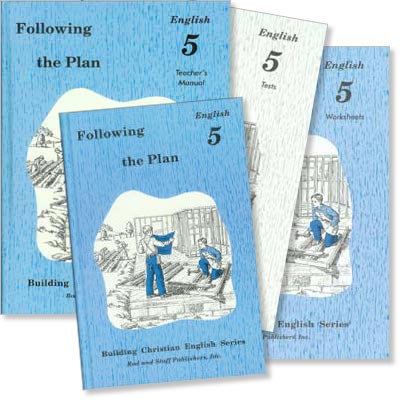
For one, I revamped our Language Arts. I incorporated a spelling workbook, dropped copywork and dictation, and picked up Rod and Staff for our grammar.

My priority was a teacher's guide and Rod and Staff has a well laid out one. There isn't much prep required, the lesson material is easy to present, and it can be presented in an living way. I sit with my student and we go over the lesson. When we first started I only did the oral drill section. On our term exams though, I found my 4th grader hadn't retained very much and he didn't understand or follow the printed directions. So, now we do just 3 or 4 of the written exercises too.

My 7th grader prefers this curriculum over her Analytical Grammar that she was doing. Rod and Staff seems to break it down for her in easier to digest pieces. I started in Book 5 but then backed her up to Book 4 because that's where Rod and Staff actually begins diagramming sentences. The course only progresses through 10th grade but in Cathy Duffy's review she states the program is thorough and complete. 
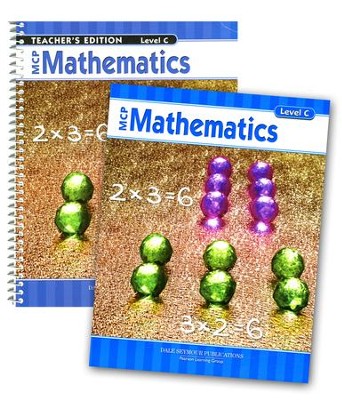
I also switched our "living" math to a curriculum. I wasn't doing such a hot job preparing the "living" lessons. Many times problems needed to be worked ahead of time and a lot of times I got those wrong. I wasn't comfortable teaching without a structured format and my children were getting frustrated with my own confusion over how to solve problems. I intended to return to Math Mammoth which we owned and used previously, but the flow of the lessons, the intermittent use of common core standards and lack of a teacher's guide turned me off. I searched through Cathy Duffy's reviews on math curriculum and found MCP Math.

MCP Mathematics Level C, Grade 3, 2005 Ed., Homeschool Kit   -
Cathy's description of the teacher's manual sold me instantly..
I sometimes use the MCP Mathematics teacher’s edition as an example of what a good teacher’s manual should look like. [...]

"I really appreciate this format where everything you might need is visible on a two-page spread. It is easy to pick out what you might want to use so lesson preparation time is minimal." cathyduffyreviews.com. 

Apparently one of the drawbacks to this curriculum is its lack of review and slow pace. Well I have Richele Baburina to thank for teaching me how to use the method of New, Review, and Mental math. It's a part of teaching math the living way.


There are plenty of problems in each section, more than could or should be done in one setting. I use the teacher's guide to "teach" the new part. I sit with my student as we work through the first few together. I then assign a few problems in the book for the student to work on independently.
I flag pages with a post it note that have problems I want to return to later for review, these problems are presented after their independent work is completed. In the teacher's manual there is a section on every page for warm-up, mental and review math. I use these exercises as a part of review or mental math. All in all, we spend about 30 minutes on math keeping the lessons short. 15 minutes on new, 10 minutes on review and the last 5 minutes on mental math. Lessons are still short and end on a lively note.

In spite of it being a curriculum, I'm still attempting to keep it lively and interesting. The kids seem to like it and they really like the fact I "look" like I know what I'm talking about.

I made a few other changes too, like dropping Spanish and Spanish folksong. I don't speak a foreign language and its been difficult for the children to pick up without any "immersion". I decided to hold off on Plutarch this year and I'm taking to the kids to an outside art class since that was always pushed to the back burner.

So there you go, our necessary changes to make this season more manageable. 

**updated planner pages uploaded under "Printables" tab

Thursday, August 9, 2018

Planning Our 2018-19 Charlotte Mason Year

We all love planning posts! They give us ideas and ideas give us a place to start. I've said it a million times, "Planning gives me purpose, and purpose gives me peace!"

In the 8 months since I last blogged we've finished Terms 2 and 3 of our 2017-18 school year, I completed a few of the CM Educator Courses offered by Charlotte Mason Soirée, have continued reading CM Volumes, even started reading a new CM book called "In Memoriam" and I started selling living books with my Mom in our FB group, "Media Moms Little Country Shop." Its been busy!

Well, now its time to start planning for 2018-19! It is our 4th year at home! My oldest moved up a form to Form III and my youngest moved up to Form IIb. Forms are groups that Miss Mason used to identify the ability (grade) of the student. The whole a/b thing used to confuse me until I realized b is for beginner and a is for advanced!

Pre-Planning Prep

My planning starts with review. A Delectable Education has created a handy tool that organizes all subjects for a particular Form into an outline. I added the particular episodes onto my printed copy and then check them off as I work my way through each subject, taking notes. I also reference the correlating chapters in Miss Mason's Volumes to ensure I'm getting my info "straight from the horse's mouth."

Last year I planned everything in accordance to my consult with A Delectable Education. My goal in learning to implement a Charlotte Mason education in our home is to be independent in doing so. Although, I did receive a consult this year, it was to mainly double check myself against what I had already planned. Moving up into new forms can present a challenge and I wanted reassurance before I just jumped in with both feet. Next year I hope to plan our entire year on my own, but we will see.

So, after I realized I was on the right track, I went ahead and filled in my Scope & Sequence outline with our plans. 

1. Scope & Sequence

I have found that having a S&S outline keeps me from forgetting subjects. I think it was last year or the year before that I completely left off history! I was only working with scheduling cards and I missed transferring history to our daily lesson plan. Thank goodness we were only 3 weeks in when I found my mistake. Plus, its just nice having an individual form for each child. It provides that "proof" you might need if a day ever comes when you're asked what you taught. 

Of course this form will vary with your own chosen subjects for your children but I will share what I'm doing this year. 

Bible
· Old Testament
· New Testament

History
· American
· spine
· biographies
· British
· spine
· biographies
· Ancient (only for my oldest)
· spine 
· biographies
· Book of Centuries
· Timeline

Geography
· Mid-West to Northwest USA
· reader
· map skills
· physical

Citizenship
· Plutarch's Lives 
· youngest is starting with Emily Beesly's
               Stories from the History of Rome  

Current Events

Literature
· Mythology
· Classics/Tales
· Poetry
· Shakespeare

Language Arts
· Copywork
· Narration
· Dictation
· Recitation
· Grammar

Foreign Language

Natural History/Sciences
· Nature Lore
· Science
· Nature Study
· Biographies

Maths
· Arithmetic
· Sloyd
· Geometry
· Pre-Algebra

Enrichment Studies
· Artist
· Composer
· Singing
· Drawing
· Handicrafts
· Instrument

Physical Education

Drill

2. Pulling Books

This step and the previous step work together. Who we cover in history in part depends on book availability. I have a general idea who and what we are covering and pencil that in first. I pull that from an old United States History text that provides a topical outline in the back. I will have to change that approach next year since it stops at 1900!

Then I start hunting books and if I can find a book I will permanently add it to our outline. I use a variety of resources to find books. I always pull from our own library first. This is why my history section is in chronological order, it makes it a lot easier to pull. Then I will check out online resources. 
A Few Book Finder Resources:

3. Daily Schedule

Before I start work on our homeschool planner I hash out our daily schedule. I have found the easiest way to do this is with the scheduling cards from A Delectable Education. I print out the 2 different Forms on 2 separate colors. When the students share a subject I print that in white. 

I just work my way through the days of the week. It reminds me a lot of the game of Tetris. Each card is marked so you know how to alternate the subjects and to let you know how much teacher involvement is required. That's helpful when you're having to play round robin between multiple students. You really just have to move things around until you find what works for your family. Well worth the price!! Once I have them all laid out I snap a pic so they don't get blown away by someone opening the door, or stomped on by a playful dog! 

4. Planners

Now that the daily schedule is laid out, I use those pics to assemble my planner pages. I like to have a "weekly dashboard" in my planner so I can see what needs to be done for the week. 


Each week starts with an overview. Since our books change constantly I wanted a place to keep up with those. I also needed a spot to add in what to cover during the week's geography walk, a place for our nature study object lesson and our handicrafts for the week. This is just another accountability factor for me. These are the things I skipped most often because I hadn't prepared. Now, at the beginning of the week I fill this in and in doing so plan and prepare for what needs to be done.  

Each day is organized exactly like my scheduling cards. White sections are family subjects, darker shaded area is my Form 2 and lighter shaded area is my Form 3.  I add the length of time the subject requires, a bubble for checking off (which always makes my heart happy), and the afternoon occupations that need to be accomplished. I want them reading in the afternoon so I designate "subjects" for them. These are "free" reads so who/what they pick is entirely up to them but it has to be within that subject. I will write in what we actually read/completed on the lines below. This way I can keep up with page counts from week to week. Especially helpful for bookmarks that lose their spot! 

I tried adding anything that I tended to skip most. At the end of the week you will find spots for making sure we complete the timeline, book of centuries and calendar of firsts. There's plenty of space to add notes as we move through the week for supplies we might need next week or areas I need to focus on a little longer. 

I use Publisher and convert it all into a pdf that I will send off for printing and binding. But planner planning is enough for its own blog post. 

Tuesday, January 23, 2018

Charlotte Mason Exams

We just finished exams last week!! These were the first I've ever given in our 3 years of homeschooling and boy, oh boy! were they telling. I don't mind though, I certainly need an external way to hold myself accountable and these exams certainly fit the bill.

In order to prepare for exams I went back and listened to A Delectable Education's podcast number 64. Then I went on the hunt looking for exam questions to use as samples for my own. I also dug around the Ambleside Online site to see what they had to offer up. Some of the ones at Ambleside though didn't seem as "general" as the ones from PNEU. Ambleside Online is a great jumping off point, I just wouldn't want to use their questions verbatim. Oh! Ambleside did offer exam questions for Plutarch! Big plus there!!

The best source is the PNEUs Programmes with the examination questions behind them. I found a lot of Form I programs, and one Form II. I haven't dug much further than that to see what else is out there but I will provide links to what I found. I'm not quite proficient at searching the Charlotte Mason Digital Collection (CMDC) but they have a lot in there!

When I modeled the outline and questions that were in the Examination Programme I realized there were things I wasn't staying on top of. (ouch!) As we covered the questions during exams I definitely identified where I wasn't having them narrate like I should or when I wasn't scaffolding a lesson. Term 2 is going to be a game changer for us and I'm already excited about next terms exams just to see how we improved!

I found 39 exams HERE in the Internet Archive. I'm not sure if this archive is a duplicate of the individual 39 but there are10 volumes of PNEU Teaching Programmes and Examination, 1921-1968 at this link. 

Once I had all our exam questions typed out and organized I set it aside and gave myself a break. The kids were nervous because the only exams they had ever taken were through the public school system. After our first few questions though they weren't so nervous. They realized they were basically narrating like usual. They sure had a lot to say!! I typed nearly 5000 words that week! I kept our schedule the same and just asked each child their particular question in their timeslot. They had the same amount of time to answer their question as they would have for class. It took three days to answer 3 Bible questions, one question per day, per subject. It worked well for us.

I tried to type exactly what they were saying. I typed their errors and left questions blank that they couldn't begin to answer. I didn't "grade" our exams and I don't think the ADE ladies or Charlotte even recommend keeping them. But I'm going to file them away. I like keeping that stuff as mementos to smile over later in life.

Now we're on a week long break. We start back up next with refreshed minds and heart! My view is clear and motivation encouraged! Yes, definitely looking forward to next terms exams!!

Tuesday, January 9, 2018

Charlotte Mason Grammar & Composition

Most times, when something isn't working in our home its because the directions weren't followed. The same holds true for following Charlotte Mason. I'm constantly fighting my tendencies to return to and follow a system. Most recently I caught myself panicking about my daughters lack of composition skills. Her lack wasn't because of Charlotte's method though! It was my misunderstanding, my lack of knowledge, in how to implement language arts according to her method.

After digging in I've realized not only have I not been consistent in some important areas, I've also not been doing them correctly!! Here's my plan to correctly implement Miss Mason's method.  

As my daughter is in Form II, we will continue with her copywork, oral narrations after every reading, short grammar lessons, and more frequent written narrations. 

Oral narration teaches her to order her thoughts. It's basically a retelling of what she has read. She does this after all her readings. 

Copywork and dictation teaches spelling in context and sentence structure. We haven't done well in either of these areas. For copywork, I've always handed her the book and told her to copy a particular passage. She would look back and forth copying the passage down. That is not Charlotte Mason's idea of copywork! 

We are to train our children to look at the whole word or passage (depending on age and skill) and then practice viewing it with the minds eye (eyes shut). Once the child can visualize the word or passage, they write it in their copywork notebook from memory. This takes practice and should progress slowly beginning with words and building up to phrases. 

Dictation is the next step and usually started in Form II. I usually let my daughter pick the passage from one of her current lesson books, study it for punctuation and words she might misspell. When she felt ready I would select a sentence from the passage and dictate it. Again, not exactly what Charlotte had in mind. 

Liz, in the ADE podcast, suggested choosing a book that is below the child's ability to read for dictation. We will choose one that she is familiar with from a previous year. We will start over and begin with sentences, moving on to small paragraphs. Then multiple paragraphs and eventually selecting pages for dictation will happen in later years. 

We haven't been practicing visualization so we will start that training and I will have my daughter study the passage for punctuation and spelling issues. When she is ready, all study helps are put away and I will dictate the selection phrase by phrase, a few words at a time. We mustn't repeat and if there are three errors we will stop the dictation. Charlotte tells us not to allow the child to see the misspelled words. So I will turn the paper over and provide the correct spellings. Most importantly, I will let her know that dictation is not a test. 

Written narration is supposed to start around the same time as dictation. I recently found out that its in written narration she finds her own voice and learns the mechanics of composition. More on written narration in an upcoming post!

This entire process is a relaxed and natural progression. It has an end in sight. This is a part of Charlotte Mason's method of education.

Here, is a great visual video chart from Sonya Schafer that sums up and walks you through the way Charlotte Mason taught language arts as a natural progression.


I have found A Delectable Education's advice to be very true to Charlotte Mason's writings. They have a few podcasts that address Language Arts and I've found this one most helpful  Episode 48, "Writing: Copywork, Dictation & Written Narration".