Wednesday, July 17, 2024

2022-2023

I really only blog for the kids to have something to look back on, sort of like a yearbook. So, here I am, pulling this post together nearly 2 years after the fact. 

The 2022 school year started off with a bang. We were barely 4 months into our school year when we were asked to step up for kinship care of our great nephew (4 years old) and nieces (8 y.o. & 3 months). Everything was upside down there for a while.  I didn't even remember to take "school" pics this year. 

We had our 11th grade daughter, 8th grade son, oldest great niece in 1st grade, great nephew in pre-k, and the baby was still taking a bottle every 3 hours. I think we all went on autopilot and were really just praying and hoping for the best. The littles stayed with us for 3 months and were then pulled into foster care. 

Following was the homeschool plan but honestly I can't remember if we made any mid-year changes or what was actually finished. Our daughter took one class as a dual enrollment student and decided she would wait till after high school to continue. I think the stress of having the littles with us played as much a part in her decision as anything else. Oh, she did decide she wants to pursue a career as a paralegal. Our son continued with Civil Air Patrol. Whatever else happened didn't hinder or hurt them since the oldest is headed to college and our son is headed into 10th. 

8th Grade

Bible
  • Wise Up! Wisdom in Proverbs
  • The 7 Habits of Highly Effective Teens, Covey
History
  • Uncle Sam and You, Notgrass
    • Brighty of the Grand Canyon, Henry
    • Sam Colt and His Gun, Winders
    • Lost On a Mountain in Main, Fendler
  • Alabama History
    • From Mounds to Missles, Akens
Language Arts
  • Fix It Grammar, IEW
  • Lightning Lit & Composition
Math
  • Pre-Algebra, Teaching Textbooks
Science
  • InnovatorsTribe.Com
    • Thinking Like an Engineer
    • Thinking Like an Architect
    • Robotics and Automation
    • Thinking Like an Innovator
Extra-Curricular
  • Civil Air Patrol

11th Grade

Bible
  • Issues in American Christianity, Notgrass
History
  • Exploring America, Notgrass
Language Arts
  • The Power in Your Hands: Writing Non-Fiction in High School, Watson
  • American Literature, Apologia
Math
  • Geometry, Acellus
Science
  • Conceptual Physics, Paradigm Accelerated Curriculum
  • Physics, 101 DVD
  • Physics Lab Kit
Electives
  • Spanish II
  • MicroComputer Applications (dual enrolled)

2021-2022

These last couple of years have been odd school years. The pandemic of 2020 threw a wrench in everybody's plans. Even homeschoolers couldn't do the things they normally would, library visits, field trips, and such. Then we roll into 2021 and life still hasn't returned to "normal". Partly, because of the pandemic and more likely because I really enjoy the "not going" and just staying home. The pandemic turned me into a hermit!

This school year my daughter is in her second year in high school! We arrived way too fast for my liking. She's a beautiful, sweet girl who truly loves Jesus. I think back over the years and I tend to focus on all the things I think I messed up because she was the first student I ever homeschooled. She was my learning curve. Leaning on Jesus and trusting her path to Him I've come to realize my "feelings" don't line up with the picture presented. My oldest loves to read, she is organized, knows how to prioritize, and is an independent learner. She isn't sure what she wants to do for a "career" yet, but her plan is to start off in business until she finds her way. Although her road has been a bit of a zigzag getting here, I'm pleased with where she's headed. 

My youngest is smack dab in the middle of middle school. He turned 13 this school year and I'm so thankful that neither of my teens experienced any of the teenage angst I went through. He is a serious young man, a thinker who likes to crack a joke every now and again (he's getting better at it!) I thought my experience with his older sister would serve him well when he arrived at the same grade levels but I quickly found out that they have different learning styles. Planning and scheduling aren't natural for him. So, we are focusing on using a planner and being more independent this year and so far, it's been going really well. He joined Civil Air Patrol over the summer and has decided after high school he will join the Air Force. We'll see, a lot can change in those 5 years. 

The biggest change for me is that I stopped using my yearly planner. It was getting redundant copying everything out of my oldest's planner and then writing everything twice in mine and my son's for his work. I generally grade all my son's work in the morning and write his assignments for the day in his binder. (Oh, that will make a good freebie!) Then I grade my daughter's "writing" work that needs a teacher score. She grades her math and everything else that has an "actual" answer she can compare to. She follows a schedule and then "logs" her work into her planner. So instead of all that writing, I went to a digital grade book. It helps with tracking weighted grades, transcripts, reading lists, and attendance. There was a learning curve but I love it! You can find the free one that I use here at Five J's. 

7th grade

Bible
  • Journey through the Bible, Bk. 1, Benz, Pentateuch and Historical books 
  • Boyhood and Beyond, Schultz
  • From Boy to Man, Queen
  • What is God’s Design for My Body? Horner
History
  • From Adam to Us, Notgrass
  • A Single Shard, Park (12th Century Korea)
  • Don Quixote, Baldwin (17th Century Spanish Literary Character)
Language Arts
  • English PACEs, ACE Ministries
  • Jump In!, Middle School Composition, Watson
Math
  • Math Foundations, Miller
Science
  • Chemistry, Sabbath Mood Homeschool, Williams

10th Grade


Bible
  • Bible Study Course-Old Testament, Dallas High Schools
  • Know Why You Believe, Little
History
  • Early Modern World History
    • TruthQuest
    • Story of Liberty, Coffin
    • Sweet Land of Liberty, Coffin
    • Story of the Renaissance & Reformation, Miller
Language Arts
  • Easy Grammar Ultimate Series
  • Composition I, Christian Light Education
  • Introduction to Literature, Christian Light Education
Math
  • Algebra IB, Christian Light Eductation
Science
  • Chemistry, Paradigm Accelerated Curriculum
  • Chemistry 101 DVD
  • MicroChem Kit for labs
Electives

Geography
  • High School Geography & Cultures
  • World Geography, Endeavor Learning Lab
Philosophy
  • Introduction to Logic: Informal Fallacies, MasterBooks
Career Preparedness II
  • Life Prep for Homeschooled Teenagers
  • Money Matters for Teens, Burkett
Foreign Language
  • Spanish I, Endeavor Learning Lab

Time to Catch Up!!

 WOWZERS!!

Life has been crazy insane. I haven't posted in 3 years? I have since graduated my oldest, my next child is a rising sophomore and now we have added one more to our home! I will make some updates and share what I've been doing over the past few years during the upcoming week. See ya soon!!

Friday, June 11, 2021

2020-2021 Pandemic Schooling

 I couldn't have ever imagined the ways in which the pandemic would affect our homeschool. There weren't the usual trips to the library, meet up days at the park, field trips to museums, only day in and day out school work. 

We ended up changing the curriculum around March when my niece came to stay with us temporarily. Our school days needed a more "parent-free" curriculum. So we decided on Accelerated Christian Education ministries curriculum. They've been around 50 years, speak directly to the student and focus on Christian character development. We continued to use Angela O'Dell's The World's Story for history and added in living books where we could. 

As time passed my niece went back home and we continued on with the PACE work. It has definitely made it easier for my high schooler to be an independent learner. 

My 6th grader:


Bible: 

We were using a Bible study from "Not Consumed" but it was a short study. I'm still on the hunt for a good "Bible" program for him. I haven't really looked into PACEs because I want him to have some variety from them. Right now, he reads a devotional in that time slot. 

History:

He is reading through The World's Story, Volume 1. It's from Creation to the Roman Empire. I've only had him doing some of the worksheets, alternating with narrations. He has really enjoyed it. 

Geography:

We were doing our own Countries and Cultures study but it ended up being delayed until next year. We made it all the way through Europe though and we will pick up with Asia next year. 

Language Arts:

We started using ACE ministries PACES for English/Literature & Creative Writing/Word Building while my niece was here. It kept things simple for my son to stay on top of his own work and surprisingly the Word Building has really improved his spelling. I'm not pleased with the Literature choices and have been giving some thought to changing that portion. The English grammar portion has worked out fantastic as well. We will stick with that for sure. 

Math:

We are using ACE PACES for math as well and LOVE it. Its a mastery program and it speaks to the child. My son is learning and retaining and we will likely stick with this all the way to graduation!

Science:

Well, Science gets the job done in PACEs. I can't say that he is really enjoying it or even that he's retaining all the fill in the blanks. He likes it because he can get it done faster but I want it to be richer. I think we will flip back to Sabbath Mood Homeschool Sciences next year. 

My 9th grader:


Bible:

We used Heart of Dakota's "Comparative Religions" course in their World Geography bundle. It was AMAZING! My daughter loved it and learned so much about world religions from within a Biblical worldview. 

She also read Be Your Own Selfish Pig by Susan Schaffer Macaulay, and The Pursuit of God by A.W. Tozer. 

History

Because my daughter so loved Angela O'Dell's America's Story in younger grades we went ahead and beefed up O'Dell's middle school program for Olivia to take "Introduction to Ancient and Medieval Studies" using Volume 1 and Volume 2 of the The World's Story. She has learned a lot through just Angela's books but we also added Primary Sources and a whole slew of living books and biographies. 

Geography

As you know our Countries and Cultures study was delayed but my high schooler did continue with her Current Events studies which included mapping. So, we were able to incorporate map work through events and her historical reading. 

Math

Math has been a struggle, only because I kept changing curriculum. She has used ACE all year filling in gaps and hopefully this summer will actually start Algebra I. Our goal is for her to be in geometry before her sophomore year is up, we will see. 

Science

We used Biology PACES from ACE ministries this year. She took a biology "lab" course at the beginning of the year so that fulfilled the lab component. She also watched the lab videos and filled out the lab sheets as she completed her course work. Biology isn't a favorite of hers. I'm not sure if its because of the subject matter or the course work. In anycase, we are switching back to Sabbath Mood for her next year too. 

Electives

Electives have been hit and miss this year. 

Health-she read select chapters from ABEKA and also completed Georgia Virtual's course online

Driver's Ed- she's still working on

Computer Literacy- she's also still working on. We found a great site, GCFGlobal, that offers free tutorials and typing lessons. She hasn't been very consistent up to this point but she does like the course work. 

Thursday, April 23, 2020

World War II Movies

As we cover WWII in these final days of our school year I wanted to add some movies for us to watch as a family. The kids already watched "The Diary of Anne Frank" and weren't impressed. I wish I had pre-screened the version we chose, there are so many options. Anyway, I'm adding these others for our family movie night.
The Boy in the Striped Pajamas
Auschwitz
Amazon Prime/Rent

Tora! Tora! Tora!
American/Japanese Perspectives
Pearl Harbor
Amazon Prime/Rent
     
The Book Thief Poster
Germany
Amazon Prime/Rent

Poland
Amazon Prime/Rent

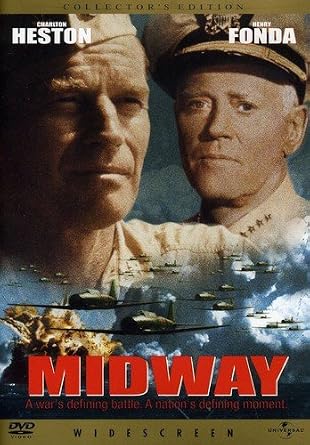
Midway (Collector's Edition)
Battle of Midway
Amazon Prime/Rent


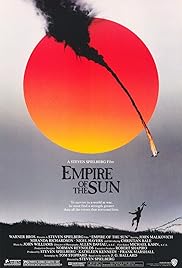
Empire of the Sun Poster
British schoolboy in China
Amazon Prime


Only Way, the
Denmark
Amazon Prime

Tuesday, April 21, 2020

2020-2021 General Scope and Sequence

I've been talking things over with the kids to see what they've really enjoyed about our unforeseeable changes this past school year and what they have missed. I was pleasantly surprised by their responses.

They didn't enjoy drawing as much as they did singing the folksongs and hymns. They want to do personal devotions and Bible studies. They want to do another Shakespeare play!

We are continuing our eclectic style this year to meet our students where they are. This year we will be using curriculum for History, High School Literature, Language Arts, Science and Math. We will round these subjects out with biographies, historical fiction, literature selections, and nature lore because we love offering a literature rich education to the children. We will also utilize movies, special projects, and field trips just to change up the pace a bit.

Following is a brief outline to help me stay on track and not forget any of the subjects to address. I did that one year totally forgetting to cover history for the first few weeks!

Bible
· Old Testament
· New Testament

History
· World
· biographies
· Timeline

Geography
· reader
· map skills
· physical

Citizenship

Current Events

Literature
· Curriculum
· Mythology
· Classics/Tales
· Poetry
· Shakespeare

Language Arts
· Grammar
· Copywork
· Narration

Natural History/Sciences
· Science
· Nature Lore
· Nature Study
· Biographies

Maths

Enrichment Studies
· Singing
· Drawing

Physical Education

Monday, April 20, 2020

Planning for a High Schooler

It's hard to believe that in 25 days I will be the parent of a high schooler!!! We gave her the choice to attend the local high school but she's pretty adamant she isn't going that route again. Personally, I didn't think her first four years (pre-K - 3rd) were all that bad. Our decision to homeschool wasn't really based on any one precedent. Over the past five years though, we've seen some things that made us glad we were led to home educate our children.

So, in 25 days we will have a freshman and 6th grader under our roof. I'm comfortable planning for my youngest since this will be my second time through 6th grade. My high schooler? I'm not so sure. She's bright, a self starter who loves to read and "do" school. My worry is transcripts and college, making sure she takes all the appropriate readiness exams, experiences prom and learns how to drive.

If I had to pick my biggest fear, it would be teaching her to drive. Not the teaching part, but the letting her go part. I've let myself daydream a bit about letting her take the keys and drive herself to church or into town. We don't live far from either, its not a particularly dangerous drive, at most 7 miles on a small town road. But the what if's and not knowing parts get me every time. I've already started praying that I'm not going to be a horrid empty nester.

Now is a good time to start considering next year's plan. I feel like it's a whole new ball game with a high schooler. The rules are changing and I have to actually keep up with what I'm teaching her; course titles, descriptions, work load, credits and grades. So, my next few posts will be about planning for high school and sharing all the great resources I've found to help us along. If you have any suggestions or great resources leave me a comment!

Wednesday, November 6, 2019

Middle School Science

Since Apologia didn't work out like I hoped, I allowed my daughter to join in with her brother's science as a holdover until I found something better. At the time my 5th grader was using God's Design from Masterbooks. It covers 5th - 8th but the topics weren't "general" enough for my 8th grader. An entire term is dedicated to one subject and the lessons themselves, were too short for the information being taught.

My main goal is to cover some gaps in her sciences before starting high school. I wanted something narrative, with occasional experiments, that would fit a "general science" requirement. We all ready covered earth science with living books rather thoroughly during physical geography.

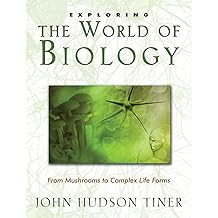
I wasn't to concerned with biology since the plan is for her to take it in 9th grade. However, she is participating in labs this year and I wanted her familiar with the material. So, she's currently reading Tiner's "Biology" book to meet that need, and really enjoying it! The text is interesting and actually covers quite a bit of the major topics.

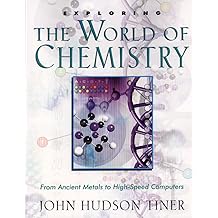
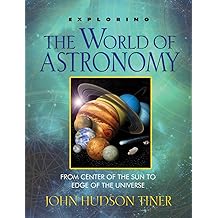
Since she is already reading biology and scheduled to read physics, I decided to take a look at the rest of Tiner's series. We are adding chemistry and astronomy to the list.  I couldn't have asked for anything more perfect. These are short enough to finish over the school year but have the breadth and depth I was looking for!


          Ready-to-Use Science Proficiency Lessons & Activities: 8th Grade Level

Turns out, while I was at a library book sale I stumbled across a "Ready-to-use Science Proficiency Lessons and Activities" guide for 8th grade. It has been the perfect addition to round out Tiner's books. After reading some reviews on Amazon, I am pre-reading the worksheets to ensure these do not state anything more than the facts being taught.

To help drive home a few of the lessons I added some interesting YouTube videos. One particular set that I really like is produced by the Amoeba Sisters. They've only covered biology so far but I'm hoping they will make more for when my youngest is ready.

This "plan" is evolving as we progress. We've already covered physical/earth science and we are currently covering biology. I will add the other books as we come to them.


8th Grade General Science
Biology
Exploring the World of Biology, Tiner (14 chapters)
  1. Beginning classification, plants, fungi, yeasts, molds, pasteurization
  2. Microscope, simple and complex organisms, paramecium, protozoa, amoeba, euglena, algae, diatoms, bacteria, anaerobic, virus
  3. Classification System
  4. Plants, purpose, structure, life span, seeds, spread of seed, vegetative reproduction, spores, photosynthesis
  5. Food for energy, carbohydrates, glucose molecules, fats, hormones, insulin, proteins
  6. Digestion process beginning with teeth, through stomach, to small intestine, taste (tongue & taste buds)
  7. Plant Inventors-Luther Burbank, George Washington Carver, George de Mestral, land stripping, legumes & nitrogen
  8. Insects, classification, structure, life cycles, Jean Henri Fabre, metamorphosis, Louis Pasteur & silkworm disease
  9. Arachnids, structure, webs, behavior, molting
  10.  Classification of life in water, fish anatomy, fish respiration, lateral line, Jules Verne, Jacques Cousteau, diving, amphibians-structure & respiration, life cycle
  11. Reptiles, body temperature, reproduction, snakes-bites, structure, detecting prey, venomous snakes, lizards-structure, life cycle, habitats
  12. Birds, structure, life cycle, migration, beaks, food, digestion, John Audubon
  13. Mammals, traits, structure, reproduction, variety in size, carnivores, rodents, cats, sheep, elephants
  14. Fossils, primitive humans, Darwin, fluorine dating, frauds, hoaxes
Biology Labs & Videos

Plants- Structure and Function (video) https://youtu.be/pFaBpVoQD4E
 Cellular Respiration (video) https://youtu.be/JEnjph9miK4
 Lesson 73: Photosynthesis p. 325-328, Handwerker's book

Cells- Types, Structures, Functions
Prokaryotic Cells vs. Eukaryotic Cells-
                   Amoeba Sisters(video) https://youtu.be/Pxujitlv8wc
                             Prokaryotic Cells vs Eukaryotic handout at TpT      

          Introduction to Cells: The Grand Cell Tour
                             Amoeba Sisters (video) https://youtu.be/8IlzKri08kk
                             Cell Structure (CGI) https://youtu.be/URUJD5NEXC8
                             Identify and Color animal and plant cell structures worksheet from TpT
                             Complete Cell Structure worksheet Les. 75 in Handwerker’s book

          Cell Division: Mitosis-
                             Amoeba Sisters (video) Mitosis https://youtu.be/f-ldPgEfAHI
                             Complete Mitosis Les. 76 worksheet in Handwerker’s book
         
          Cell Types & Cell Theory-
                             Purple Onion Peel cells under microscope
                             Onion Cells 40x and 400x
                             Cheek Cells
                             Cheek Cells vs. Onion Cells
                             Bacteria, Protist, Plant Cell and Animal Cell microscope
                             Introduction to Cell Theory

Specialized Cells: Significance, Examples, Organization
                   Amoeba Sisters video https://youtu.be/wNe6RuK0FfA
                             Read Specialized Cells
                             Complete Body Cell Matching sheet and add to notebook
                             Levels of Organization “Cornell Notes” presentation (read slides 3-12)

Labs Completed w/Co-op (Apologia)
Mod 1/Exp 1.2          Introduction to a Compound Microscope
Mod 2/Exp 2.2          Kingdom Monera: Pond Life B
Mod 3/Exp 3.1          Kingdom Protista: Pond Life C
Mod 3/Exp 3.2          Subkingdom Protozoa: A & C
Mod 3/Exp 3.3          Subkingdom Algae: B
Mod 4/Exp 4.2          Yeast and the Fermentation Process
Mod 6/Exp 6.1          Animal Cell Anatomy
Mod 7/Exp 7.2          Mitosis

Big Bang, Fossil Record, Evolution, & Natural Selection
This has been the hardest topic to cover for my middle schooler. I found some short video clips (longest is 4 minutes) and articles for her to read. I have to keep reminding myself this is introduction only and that she will cover these topics more in-depth later in high school. 


I will continue to edit and add to this post as we progress in our year.... 

Wednesday, October 23, 2019

Life Skills

Life Skills, a fancy title for teaching your children how to adult. In our home it starts with chores. I have tried so many strategies but none have worked better than the Job Box. In the 80's a book came out titled, "Sidetracked Home Executives" and my mother whole-heartedly jumped onto that bandwagon. I have to say at the time it wasn't a favorite for us kids but it worked. Recently, that particular job box was passed on to me. After some revamping to fit our family, we are now using that same system.

The S.H.E. system has been wonderful. It removes me, the nagging mom, out of the equation. The kids know exactly what they need to do without my having to tell them daily. It took some time to get everything set up, then some training in how to use the system and how to complete certain chores but that little bit of work has saved a ton of aggravation since.

Basically, the system uses 3x5 index cards filed in such a way to maintain household chores. The box itself is divided into three sections; Monday - Friday dividers, days of the month 1-31 dividers, and then monthly dividers.

To determine the chores you want to include you walk through each room of your house with pen and pad and write down EVERYTHING you want done in those individual rooms. Once that's done, look over your list and write next to the job how often you would like to do the things listed; daily, every other day, weekly, every other week, monthly, seasonally, yearly. If the job takes 10 min or less to complete it's a "mini" job, write that next to the frequency.

Once you have your completed list it's time to transfer all of that onto index cards. You will need 3 colors. Mine are yellow for daily and every other day., green for weekly and every other week, orange for monthly and beyond.

The kids are responsible for any chore relating to their living space, bedrooms, bathroom, and game room. They also have assigned chores throughout the house; Eli unloads the dishwasher in the morning, Olivia loads in the evening, Eli takes the trash out and feeds the dog, while Olivia sweeps the kitchen floor and feeds the fish, so on and so forth. All daily chores are grouped by person assigned to and placed in front of the particular day card it is. When they get up they go to the box and grab their set.

Weekly mini cards can go anywhere under Mon - Fri card but remain assigned to that day. Jobs that take longer than 10 minutes are assigned to our designated heavy cleaning days. These are typically bi-monthly or monthly jobs and they are filed under days of the month. Seasonal or annual jobs are filed under monthly tabs.

Once all jobs are completed the kids set their cards aside for me to file in front of the next day.  This way I can also do a quick walk through to make sure everything was completed the way they were taught.

The first few times completing a newly added chore is the hardest, especially, if it's a chore that hasn't been done in a while. Once it's done the chore gets easier and easier to do because its maintained. I made cards for everything and I'm still thinking of more to add as I see certain areas that need attention. I even made a weekly chore card for cleaning out the car and a monthly one for washing it.

To keep things flowing well without nagging we have rules and consequences. Morning chores are completed before school. (These are labeled on the cards.) Before any television, tablet, or PlayStation time ALL chores must be completed. If they get on devices before chores are done then they lose those privileges. It really is a huge motivator for our children.

Now there are some of my monthly/seasonal chores that I will occasionally ask the kids if they would like to do and earn some money. My oldest earned $10 by scrubbing the siding on the back porch! I don't pay them to complete their own chores. We don't have a scheduled allowance here, just opportunities to earn some cash now and again.

The system works great for us and I love how the house is coming together!

Friday, September 20, 2019

Homeschool Schedule and Planner Layout

The last two years I made a planner using Publisher and had it printed at Staples. It was a lot of work and expensive to print. This year I wanted to keep things simple and decided to use a spiral bound notebook instead. This notebook has been the best planner out of all the years I've homeschooled!

I printed our weekly schedule in color and taped it inside the cover of my notebook. Then I use color coordinating ink pens and colored pencils to match the printed schedule. It's colorful and yet simple at the same time.

I don't use a planner to schedule out what needs to be done, I use it to keep up with what we've completed. In the morning, I check what is scheduled for the day and transfer that to our current date.  I write the date and then in green ink (our together subjects) I go down the page adding the subjects, skipping every two lines. First skipped line is my son's and his is written in blue, the second is my daughter's and she is in pink. To draw the eye more (or maybe just to please it) I "highlight" the words with the same colored pencil. As we move through our day I add what we've done and if needed, I have room in the margins to write notes.

                       
Just in case you were wondering, we love our new schedule! The time slots are all designated the same. A together subject, followed by a round robin of my son requiring assistance and my daughter working independently, till after the next together subject where that switches up. Then my son works independently while I help my daughter. It's basically the same all week long with just a few variations in some of our subjects. The kids like knowing what's next. 

Our attendance record is hole punched and in a three ring binder along with "printed" lesson plan schedules. We call it the "Mom Binder" and it is divided by subject; Records, Bible, Language Arts, Math, History, Geography, Science and Nature Study. Since my planner is three hole punched I could clip it into my binder but I haven't found it necessary yet.

So there you have it, an easy peasy and inexpensive way to keep up with your days!


Thursday, September 19, 2019

FREE Continent and Country Study Packet

I am so excited to share with you what I've been working on for my family! I've been hunting high and low for a country & cultures study for my 5th and 8th graders to do together and its been rather frustrating. I found a few that might work but they cost an arm and a leg. Plus, I would still have to tweak them for our grade levels. Other studies lacked the cultural depth I wanted to cover. Finally, I decided to just bite the bullet and make my own.

Once I actually sat down and figured out what I wanted the kids to study, it was only a matter of assembling it. One of my "must haves" for our Country and Culture Study Packet had to be ease of use. I want the ability to access one file to print out as many packets as required to cover a term's worth of countries. Adaptable to multiple resources, is another must have. We enjoy using living books, textbooks, videos, and curriculum. I wanted a packet that could work with any philosophy.

I'm sending this packet to Staples for a bulk printing for the rest of the year. Then I will only need to print 2 maps to complete the packet as we come to whichever country we've decided to study. One is a regional map, showing border countries, and/or bodies of water. The second is a map of the country itself, the kids will mark key cities and geographical features on this one.

We plan to travel through all the continents and visit the commonly known countries, beyond that I haven't decided. This Country and Culture Study Packet is going to save me hours of work and I hope it helps you too!!


Thursday, September 12, 2019

Best Middle School Math Help Ever

I found it! REAL MATH HELP.

Pearson Education operates a website called "Virtual Nerd" and it's fabulous! The site has been around since 2008 but Pearson acquired it in 2013 and expanded upon the creator's already amazing resources.


They cover several courses of math and I see us utilizing this site for many years to come! The entire site has over 1500 videos! Clicking a course, grades 6-8 for example, directs you to their middle school page which has 413 tutorials organized by topic. Pick a topic and you have sub-topics to choose from. The videos are short, clear and to the point. The only thing I need to provide my student are the practice problems.


I feel like I've hit the jackpot and I want to shout from the roof tops "math help is here"! Go and check it out!
www.virtualnerd.com

Wednesday, September 11, 2019

Pre-Algebra, Ratios, Proportions and Unit Rates

Let me be really honest right here, I FAILED pre-algebra in school. I'm not sure that it was a lack of understanding, as much as it was a lack of interest. Okay, misplaced interest, in boys. If only I knew then what I know now. Anyway, I never really grasped the whole algebra scene until I hit college and had to take a remedial math. I actually enjoyed that class and finally began to understand the complexities of Algebra.

Fast forward nearly 30 years and now I'm trying to help my 8th grader acquire the skill of algebraic thinking. It's been tough. Winding our way between homeschool philosophies, and a  variety of curriculum hasn't helped matters any.

We are revisiting Math Mammoth this year. We had tried it once before a couple of years back but I think we stopped in order to follow a more living (Charlotte Mason) approach. Math Mammoth has been "okay" for the most part. The text speaks directly to the student which works until it doesn't. The lessons get tiresome as the author tries to incorporate a variety of methods to solve a problem. I don't remember her earlier curriculum being common core aligned but it is now and she is continuously trying to cover all her bases. It's easy to get bogged down with it all.

We are at that point right now with Ratios, Proportions and Unit Rates. I had to find a different resource to help her understand what she was doing, the steps she needed to take and find plenty of practice problems (with answers!)

I found a Pre-Algebra book on the Internet Archive that provided examples, guided practice, practice problems and answers in the back. We like it's set up.

To increase fluency and remove "Mom" from the equation I also found these videos on YouTube by Tyler Dewitt:

Understanding Conversion Factors
Converting Units with Factors
Converting Units using Multiple Steps
Multiple Conversions (Part 2)

Tyler has a couple of more videos in this playlist about using unit conversions with area and volume, and converting metric units of volume. When we get there we will watch those too.

I also printed out "How to Convert Units of Measurement" posted by Stan Brown at his website BrownMath.com We like how he gives step-by-step instructions. In fact, he has a ton of teaching tips and a couple of free math texts (statistics and trig) on his site, you should go check him out.

Well, it's time for me to go tackle some algebraic thinking!

Saturday, August 31, 2019

Our 2019-2020 School Year Plan 5th & 8th Grade

We are 5 weeks into our school year and I'm hoping it's safe to post this! We always end up tweaking things as we realize what works and what doesn't. We have made changes already this year but this should be our final plan. We have such a great time so far!

This year we have a 5th and 8th grader! It is time to buckle down and get our 8th grader ready for high school. This year she will learn the skill of note taking, studying and taking a test. She will also work on the mechanics of writing papers and continue working through her Pre-Algebra course. Our 5th grader's goals include improving spelling, progressing in math and improving his writing dexterity.

I also wanted to keep them both together as much as possible in order to keep things simpler. I will show you below how we did it. So here's the plan.


BIBLE (together)
  • 10 min  Bible  4x/wk
  • 15 min  What Every Christian Ought to Know 4x/wk
  • 15 min  Trial and Triumph 4x/wk
The kids requested we continue Bible study as a group. My oldest reads her devotional before bed, my youngest isn't there yet. He would if I pushed but I really want that to be a personal choice for him. Our church is following the Gospel Project in Sunday school and that's what we are following at home. We read the selections throughout the week along with the Scripture from their Sunday school books. It's made for some wonderful discussions at home and church.

We are also reading "What Every Christian Ought to Know" by Adrian Rogers. The kids enjoy his writing style and it teaches key points of doctrine.

On Friday's we don't read Adrian Rogers, instead, we read a short missionary biography from Trial and Triumph. The book is laid out chronologically so we started in the last section for our "modern" time period.

HISTORY (together)
  • 30-60 min  America's Story/Civil War Study  5x/wk
  • 30 min       Historical Biography/Fiction read  1-2x/wk
Originally, we planned to stick with 3 history streams; American, World and Ancient. After looking ahead to our 8th grader's high school plan, we decided to change course. We are only doing American history (1861- present) this year. If we can get it all in, the plan is to study the Civil War in depth and work our way toward today. It's a lot of ground to cover but I like the way Angela O'Dell has it all laid out in her history series, America's Story. We still read aloud together as a family, the kids still narrate and then they have their individual historical biography/fiction books they also narrate. I'm debating whether or not to add some type of writing component for my 8th grader later in the year. 

The Civil War is an important part of our Southern history and its important to us that it is taught in an objective and accurate way. We found a wonderfully detailed unit study from Homeschool in the Woods specifically about the Civil War. We don't do all the projects because they require a lot more time than we have. Since we are a military family, the kids have really enjoyed the "military" projects. We usually do all the copywork, labeling of maps and timeline. 

We also chose some books off of Guest Hollow's American History list to read as a spine, specifically for the Civil War. Once we are past the Civil War, America's Story texts will be our spine.

SCIENCE/NATURE STUDY (together)
  • 30-45 min Curriculum  4x/wk
  • 30-45 min Nature Study  1x/wk
  • 30 min Science Biography/Reader  1x/wk
  • 30 min Special Studies Reader  1x/wk
God's Design for Science from Master Books is geared for grades 3rd - 8th and since I'm all about simple this year, we decided Olivia could participate as well. She completes the "challenge" sections, experiments with lab reports and takes the exams to ensure she is getting what she needs. 
**Curriculum Update** We stopped using God's Design after completing a term of Chemistry. The lessons were to short and dense for the information being taught. My students were unable to retain the material. They loved the experiments but I wanted them to understand and retain the concepts. We switched my youngest to ABeka Science and my oldest is reading through the John Hudson Tiner series with added supplements. You can find information on her schedule here at Middle School Science. 
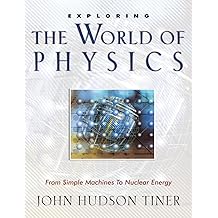
As I pointed out in earlier posts, most of her science would fall under a general science scope. This year I wanted her to focus on physical science using Apologia. When viewing the curriculum my science loving girl was rather deflated. So, in order to "fit in" the physical science portion she is going to read Joseph Tiner's "Exploring the World of Physics" book. It's a short but dense book with only 14 units. We are scheduling it once a week (in place of her special study) over her 2nd and 3rd terms.

Speaking of Special Studies, it's a Charlotte Mason thing. Many CM websites have cycles you can follow as the studies rotate over the course of the student's schooling. These are side subjects in addition to their regular science that the student can learn more about. This year my 8th grader is studying mold, yeast, bacteria and hibernation this year. My 5th grader is studying cultivated crops and mammals. This just means we pick up some living books on those topics and allow the children to read through them, narrate and if they can observe in nature.

Nature study, for the longest time, was very inconsistent. I decided to schedule it just once a week and find some sort of "curriculum" to help guide us through it. I went ahead and paid for a membership with Outdoor Hour Challenges and so far it's really paid off. I get a weekly email to keep me on track with what we are studying. The kids are notebooking all their subjects now and Handbook of Nature Study website has loads of printables for their members. 

GEOGRAPHY (together)
  • 30 min Living Books 3x/wk
Realizing my children my children had major learning gaps in physical geography, I pulled together a course to fill in those gaps. I linked it below. This year we will finish up with that plan (physical geography/earth science) and move right into people and places (human/cultural geography).

I'm still undecided about Guest Hollow. I think the book choices aren't what they could be for my older than intended students of this curriculum. Master Books has made reference to a surprise geography something in the works in one of their FB videos but I'm not sure if its physical, cultural or what. Plus, I don't know if it will be out in time.

I have found some great supplemental resources; videos, posters, teaching aides, and such. I will link below.

Physical:
  Earth Science: finish out our program

People/Places:  
 Guest Hollow Jr. Geography (parts of)


PBS Series: Families of the World 
I'm hoping to find these at the library! The whole set can be purchased online but its pricey! They even offer teacher's guides. If you provide your email, they will give you a guide for each video. The guides could almost stand alone, they provide great information such as a copy of the script itself, discussion questions, tests and answers. They provide information about the land, climate, plants and animals. They address the culture and history of the people too.

ENRICHMENT (together)
  • Folk song, Art, Hymn, Composer 10 min 4x/wk
  • Shakespeare 30 min 1x/wk
  • Drawing 40 min 1x/wk
This year we picked our composer, artist, hymn and folk song to coincide with out time period. One Shakespeare play per term. We also focus on folk songs and hymns one per term. That gives the children time to learn them. We change our art prints and composer's music every two weeks.

For drawing, I purchased the drawing course, Living Art Lesson from Master Books. It should be in sometime this month!


5th Grade5th GRADE 

Language Arts 
Rod and Staff for Grammar  30 min  5x/wk
Spelling You See 15 min  5x/wk

Mathematics
MCP Mathematics 30 min  5x/wk

Geography (Physical/Map work)
Beautiful Feet's Tree in the Trail, Minn of the Mississippi, Seabird 1x/wk
      
Readers/Biographies
Literature Classic 1x/wk
Literature Free Read 1x/wk
Science Biography 1x/wk
Special Study 1x/wk

8th Grade8th GRADE

Language Arts
Jensen's Grammar workbook/DVD 5x/wk 
Getting Started with Middle School Sentence Composing by Killgallon 1x/wk
Rod and Staff Level 8 (writing sections only) 1x/wk
**Update**
ACE Ministries English Paces

Mathematics
Math Mammoth Pre-Algebra 5x/wk
Jacobs Algebra if finishes with Math Mammoth
Algebra 1: Expressions, Equations, and Applications by Paul Foerster alongside David Chandler's Home Study Companion

Geography
Book of Marvels by Halliburton 1x/wk
Current Events 1x/wk
Map Work

Citizenship
Young Citizens Reader pgs. 1-135 1x/wk
(7th grade: 1-68, 8th grade: 69-135, 9th grade 135- end)

Readers/Biographies
Literature Classic 1x/wk
Literature Free Read 1x/wk
Science Biography 1x/wk
Special Study 1x/wk             

Wednesday, August 28, 2019

Apologia Science was a Bust!

I worked so hard on our Apologia plans, then I showed them to my oldest. She was excited, at first.

After watching the first video it became obvious this wasn't going to work. I thought the videos were great but she couldn't keep up. Even after reading the text, she wasn't enthused. So back to the drawing board I went.

Also, in light of my mother's impending surgery, I realized we really needed a lighter school year. So, I started trimming things from the schedule, seeking out ways to combine them both, and looking for a more open and go approach. That's when I found Master Books!

masterbooks.com - Where Faith GrowsMaster Books has a Charlotte Mason "flavor" to it but it's all contained within these well written texts WITH teacher's guides!! I so need teacher's guides. We are 5 weeks in and it has been a total game changer. I'll have an updated plan posted soon!

Thursday, June 20, 2019

Our Apologia 1st Edition Lesson Plans

I finally laid out my 8th graders Physical Science plans. I planned on making a bound journal similar to what they offer now for the 2nd edition but it didn't work out. Our objective for the journal isn't busy work, instead we want it to teach her how to take notes and learn study skills.

So, instead I've decided to get a binder and divide it into the 16 modules of the book. Under each module she will place the assignments for that section.

Front of Binder
Student Notes
Lesson Plans

16 Module Divider Covers Notes on the reading
Vocabulary
On Your Own Questions
Experiments/Lab Reports
Study Guides
Completed Exams

Back of Binder
review of:
Scientific Method
How to fill out lab reports
How to take Notes from text/videos
blank paper
blank lab reports

Each module will hopefully take 2 weeks to complete. She will begin each reading with an applicable video, read the assigned section, complete the experiments, complete vocabulary and OYOs as she comes to them, and as a wrap up before the exams, she will watch the lesson videos included with the Red Wagon Tutorials. (Mr. Rosenoff includes the links within his pdfs that you can download for FREE at RED WAGON TUTORIALS.) She will then complete the study guide and take the exam. We are planning for up to an hour per day, 4 days a week. If she needs more time she can use the 5th day.

Here's the binder cover and our plans. I haven't made the divider pages yet but when I do, I will add those as well.


We do like notebooking pages but I'm not sure if we are going to use them for notes or not. Here are a couple of science note taking links that I've found. I did invest in a TpT note taking module and plan to use it at the beginning of the school year.

Sprouting Tadpoles. She includes outline pages for note taking, research pages and lab forms.

Glencoe has a physical science notebooking journal that I might use pieces of as a graphic organizer.

The Yahoo! Group "Apologia Jr/Sr High Science" still has files up with schedules and resources for all the sciences.

Monday, June 10, 2019

FREE Apologia Resources

It's amazing what you can find on the internet for free. I've been on a mission these past few weeks trying to find free resources for daughters 8th grade science this year.

One huge factor that really pushed us over the edge for Apologia was the fact that they offer 40% off for military. They do have specific requirements but thus far have been terribly slow in responding to emails. I've yet to hear back from them so, I started looking for a cheaper alternative. I heard from the yesterday! (8 days later) They emailed us explaining we have to phone our order in and give the discount code they provided. Since I found all the great resources I tell you about below, I think I will stick to the plan I've made.

After looking around and reading a ton of blogs I decided we would be okay with 1st editions. I bought both, Apologia's Exploring Creation with General Science AND Physical Science,  both 1st editions for less than $10, shipping included on ebay. I don't know if I need the solutions book yet, but I can find those for less than $4 each if I do.

I'm so thankful for all the homeschooling moms and science teachers that have blazed this trail for me and I thank God for helping me find these resources:

YouTube Playlist:
Apologia General Science

Notebooks/Manuals/Lesson Plans
Red Wagon Tutorials- Amazing resource! Steve Rosenoff was an Apologia teacher. He no longer teaches and stopped selling his videos. BUT he has so generously uploaded his student and parent ebooks for public use. These are geared toward the 2nd edition. He has included his own tests and answer keys too. I'm on the hunt for his dvds/flash drives. These have been long out of print but they received such high reviews I'd like to find them.

Science Resources by Debbie Nafzgers is chock full of resources. She was a teacher too and has uploaded her lessons as well. She includes lesson plans and resources, along with study guides and extra worksheets as needed. If you find a broken link try the wayback machine from the internet archive!

Video Resources
Sahm I Am -Marty's blog is a gold mine! She has her schedule listed, videos and notes about her lessons. She also links to her other blog she created specifically for her kids.. Homeschoolers Resources. I will likely use her outline for our own. 


This list is a work in progress and will eventually get moved to a "science" tab at the top of the blog! 


Saturday, June 8, 2019

Middle School Transitions

Since our 7th grade daughter thinks she wants to pursue a science based career we decided to be more intentional with her studies and get her off to the best start possible. 

These past four years, science has been more of a general science. I felt like we were all over the place until I sat down and made a table of everything we've covered these past 4 years.

We've covered a broad range of topics using Sabbath Mood Homeschool's curriculum, several topics in "special studies" and even Earth science during geography.

I wanted to make sure we covered what was typically covered in a curriculum and looked through the table of contents of several texts. I think we've done a pretty good job covering general science but feel like we need to be a bit more "specific" in a few areas. We will cover these gaps with a few living books this summer.

GENERAL SCIENCE
Scientific Method
   Inquiry
   Limitations
   Science/Christianity
   Analyze & Interpret
      Experiments/Variables
      Series of Experiments
      Not obvious variables
      Interpreting Results

To address our shortcomings in "Scientific Method" I ordered a book written by Stephen Kramer, "How to Think Like a Scientist." It was listed on Guest Hollow as one of the books their son enjoyed. I will have to post a review later.


SCIENCE/APPLIED SCIENCE/TECHNOLOGY
Simple Machines
  lever, wheel & axle, pulley, inclines, planes, wedge, screw

We will include this in our studies of Physical Science. I will find an online lesson for her to review.

ARCHAEOLOGY/GEOLOGY/PALEONTOLOGY
Fossil Record
Life
  Classifying: Kingdoms
  DNA, Energy, Adaptation, Reproduction, Human Body Systems

As far as the last part (Fossil Record/Paleontology) I haven't decided yet. I was thinking of using some books from Master's Books or even using the actual section from the Apologia General Science textbook to fill in.

We were looking at the Apologia books for a couple of reasons.
  1. Christian World View
  2. Encourage Independent Learning
  3. Teach Note Taking
  4. Comprehensive
  5. Tried and True
Depending on the load of work we would still want to add living books alongside the course. Treat the textbook as the spine and add biographies or special studies to spice it up a bit.

So our plan (so far) is:
7th: General Science (almost finished)
8th: Physical Science
9th: Biology
10th Chemistry
11th: Physics
12th: Biology 2 or Chemistry 2

That of course could change at any given time.....